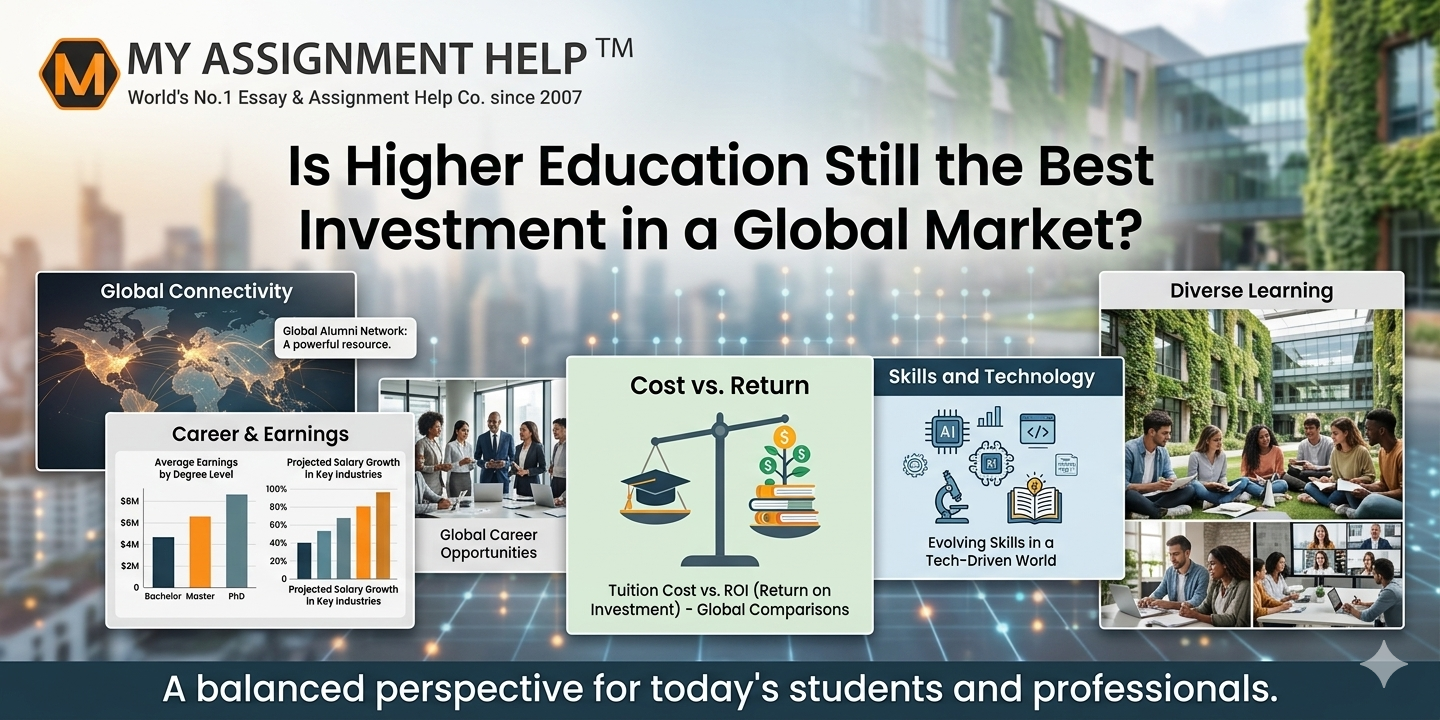
The traditional narrative of success has always been linear: graduate high school, earn a four-year degree, and secure a lifetime of financial stability. However, as we move through 2026, the global labor market is undergoing a seismic shift. With the rise of “Agentic AI,” the explosion of the “Skills-First” economy, and student debt in the United States hovering at a staggering $1.84 trillion, many are asking a difficult question: Is a university degree still the “gold standard” of investment?
The ROI Shift: Degrees vs. Competency
For decades, the “college wage premium” was undisputed. Today, the math is more nuanced. While the median annual income for a Bachelor’s degree holder sits at approximately $80,236, the entry cost has surged. In 2026, public university graduates leave with an average debt of $35,530, while those from private institutions often face balances exceeding $39,000.
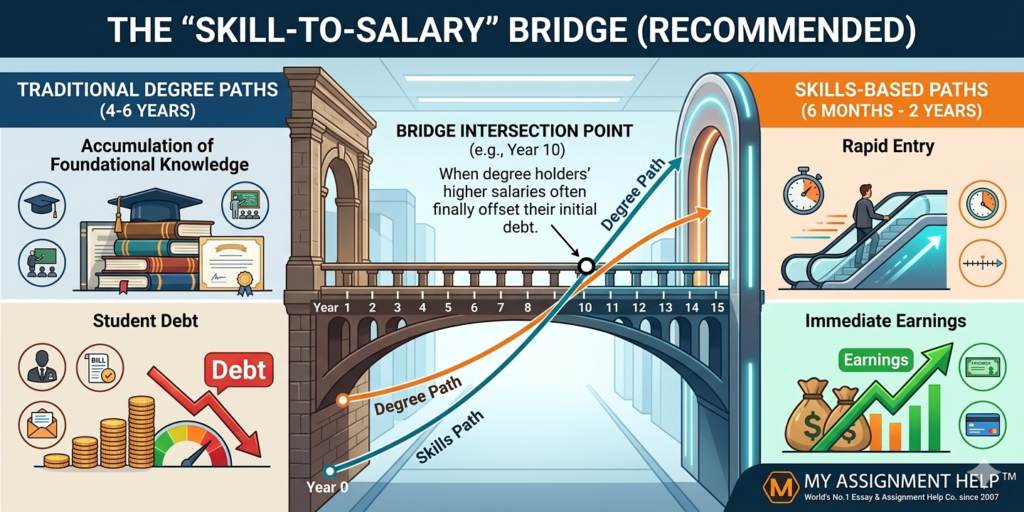
In contrast, specialized trade certifications and “micro-credentials” are offering a faster path to wealth. Recent data suggests that top-tier technical certifications in fields like precision manufacturing or smart HVAC can yield a return on investment (ROI) that surpasses a traditional degree in the first ten years of work. This is largely because trade students enter the workforce three to four years earlier, avoiding the “negative net worth” phase that plagues many university graduates.
Navigating the Skills-First Economy
The global market no longer just asks what you know; it asks what you can do. In North America, 87% of employers now prioritize skills over degrees when hiring. This trend is even more pronounced in the tech sector, where 96% of companies utilize skills-based assessments to fill roles in software development and data science.
For students currently enrolled, the pressure to balance academic rigor with practical application is immense. Many find that seeking expert help with assignment tasks allows them to focus on high-value skill acquisition—like mastering generative AI tools or participating in internships—while maintaining their GPA. This strategic delegation is becoming a hallmark of the modern, “hyper-productive” student.
The AI Variable: Knowledge vs. Wisdom
Artificial Intelligence has flipped the script on “knowledge-intensive” roles. Paradoxically, the jobs most exposed to AI disruption are those that typically require high levels of education—think junior analysts, paralegals, and researchers.
According to 2026 labor statistics, graduates who report frequent use of generative AI tools are significantly more likely to be employed in their field of study. The value of the degree is no longer just in the piece of paper, but in the institution’s ability to integrate human-AI collaboration into the curriculum. This evolution is similar to how we’ve seen child development research topics shift from purely observational studies to data-driven, neuro-technological analyses.
Global Market Trends: Where the Degree Still Wins
Despite the “de-degreeing” of some sectors, higher education remains a critical gatekeeper in specialized fields.
- Healthcare: 88% of organizations still require formal degrees for medical and support roles.
- Finance: While firms use skills testing, 89% of top-tier analytical positions still look for a foundational degree in Quantitative Finance or Economics.
- Global Mobility: For those looking to work internationally, a degree remains the primary currency for work visas and professional sponsorships in the UK, Australia, and the US. supply chain management software price, etruesports etsjavaapp guide, dojen moe, global citizenship kronosshort, bfnctutorials
Key Takeaways
- The 10-Year Advantage: Trade schools often provide a better financial foundation in the first decade, though degrees typically catch up in lifetime earnings by age 35.
- Skills Over Stamps: Employers are increasingly replacing GPA requirements with technical assessments and interview rubrics.
- The AI Multiplier: A degree’s value is now tied to “AI literacy”—students must learn to collaborate with machines to remain competitive.
- Debt Management: With average monthly payments between $410 and $455, choosing a major with a clear “Skill-to-Salary” bridge is essential.
Frequently Asked Questions (FAQ)
1. Is college still worth it in 2026?
Yes, but the “what” and “where” matter more than ever. STEM, Healthcare, and Law degrees still show high ROI, while generalist degrees may require additional certifications to be competitive.
2. What is “Skills-Based Hiring”?
It is a recruitment strategy where employers evaluate candidates based on their actual ability to perform tasks—often through tests or portfolios—rather than relying solely on their academic background.
3. How has AI changed the value of a degree?
AI has made “rote knowledge” less valuable. Degrees that focus on critical thinking, ethical judgment, and complex human-AI collaboration are seeing an increase in market value.
4. Should I choose a trade school instead of a university?
If you want to avoid debt and enter the workforce by age 20, trade schools offer excellent ROI. If you aspire to research, high-level management, or licensed professions (like Medicine), a university is still necessary.
Author Bio
Alex Sterling is a Senior Content Strategist at MyAssignmentHelp. With over a decade of experience in EdTech and academic research, Alex specializes in analyzing the intersection of the “Skills-First” economy and traditional higher education. Having helped thousands of students navigate complex curricula in Australia and the US, Alex focuses on providing data-driven insights that help modern learners maximize their professional ROI.
References
- Georgetown University Center for Education and the Workforce (CEW), “The ROI of Non-Degree Credentials,” 2026.
- National Association of Colleges and Employers (NACE), “Job Outlook 2026: The Rise of Skills-Based Hiring.”
- Education Data Initiative, “Student Loan Debt by Income Level [2026 Update].”
- Bureau of Labor Statistics (BLS), “Occupational Outlook: AI Impact Assessment 2025-2034.”